

Insight Isn't Enough
A Genius Speaks: Antonia Dolhaine | Part 3


This is Part 3 of my conversation with Antonia.
This part begins where intellect reaches its limit. And the body has to be included.
Part 3:
K: In our most recent personal conversations, you’ve spoken about a hierarchy of change—not in a moral sense, but in terms of what the nervous system and psyche can metabolise, and in what order.
How did that understanding form for you, and how has your own life confirmed that certain layers need to be in place before sustainable change becomes possible?
A: Right! Well, for a long time—and this is quite common—I thought transformation came down to connecting with the right information. To successfully answer the question: Why? Why am I like this?
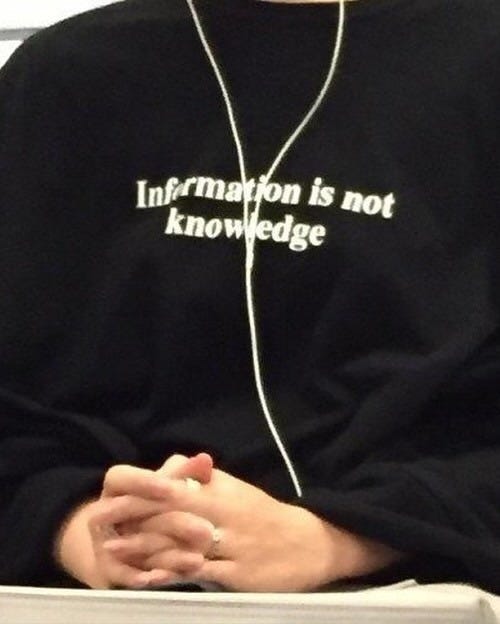
But eventually—and this is also very common at a certain stage—I had those answers. I knew my patterns in and out. I knew where they came from. I could describe them with clinical language so precise it shocked my treating clinicians. And yet, meaningful change in my life continued to elude me. I was still a slave to those same patterns. Because information is not knowledge, and knowledge is not embodied wisdom.
Embodied wisdom is what it takes to create true, sustainable change.
As the term embodied wisdom would suggest, the body has to be included. And the body, as a biological organism, prioritises change in a particular order:
biological safety (movement, nourishment, rest, shelter)
relational safety (trust, attachment, belonging)
emotional safety (feeling, expression, permission)
mental safety (meaning, identity, perspective)
The trouble is, we live in a top-down over-intellectualised, disembodied, and relationally stunted society (in the West at least).
As such, most Western approaches to transformation, including traditional talk-therapies and mindset coaching, ignorantly invert that hierarchy. They focus almost exclusively on mental safety, leading countless change-seekers (my past self included) onto a conveniently lucrative treadmill of “fixing” and optimisation-flavoured despair.


Never-ending personal development books. Always another course. Chasing breakthrough-high after breakthrough-high at retreat after mastermind.
You’re spending a lot of time and money doing something that feels intense enough that it should be working, right? But the intensity isn’t coming from actual change. It’s coming from novelty-induced dopamine hits that temporarily numb the pain arising from structural dysfunction at more foundational layers of the hierarchy.
I didn’t know any of that when I landed in my umpteenth trauma therapist’s office—who, unlike my previous therapists, turned out to be highly trained and credentialled in multiple body-centred therapies. She had the highest hourly rate of any therapist I’d ever worked with, but our work cost the least out of all the “cheaper” things I’d tried before.
Why?
Because she was the first person to teach me there was nothing wrong with my mind, my body, or my nervous system. They weren’t stealth enemies “sabotaging” my growth who needed to be “regulated” (a healing term often unconsciously co-opted to reinforce patriarchal notions of “compliance”) — they were perfect systems behaving exactly the way they evolved to.
They didn’t need fixing or optimising. They needed better support.
In other words, they needed me to become someone who understood and knew how to work with my natural systems instead of against them.
When I worked with them, structural integration was gradual but inevitable. My resource consumption and expenditures drastically decreased on every level because structurally integrated systems require the least resources (natural, temporal, energetic, financial…) to run smoothly.
The more I worked against my system’s natural hierarchy, the more it cost both me, and every living being around me whose resources I had to lean on to prop up my under-supported system.
Zoom out and consider the number of mind-body illiterate people on Earth, and our ecological crisis suddenly makes perfect sense. We have a miraculous overflow of resources available on this planet for every living being to use their minds and bodies the way they evolved to be used.
What we don’t have enough resources for is billions of structurally compromised humans locked in frenzied, extractive, survival-oriented behaviours.
This is Part 3 of a 5-part series. Part 4 will be published at the same time next week. If this conversation resonates, join the waitlist.
 | A guest post by
|